






Early last year, shortly after Donald Trump took office for his second term, former presidential candidate Vivek Ramaswamy announced he was departing the recently-formed Department of Government Efficiency (D.O.G.E) after reports of conflict with the department’s co-head, Elon Musk. Ramaswamy joined Fox News to clarify these rumors, and to tease his next endeavor –– holding public office. Ramaswamy noted Musk’s approach was “a technology approach,” whereas his was “focused more on a constitutional law, legislative-based approach.” He furthered, “when you’re talking about a constitutional revival, it’s not just done through the federal government, it’s done through federalism, where states also lead the way.” Despite their differences, Ramaswamy importantly remarked that they were both “on the same page” and that their attempts “in saving the country” required them to “divide and conquer.”
Towards the end of the interview, Ramaswamy mentioned he was flying back to Ohio that week, with an announcement regarding his expressed intention of pushing for reform at the state level coming shortly. The former presidential hopeful explained that when “we look at the country over the last 20 years, Silicon Valley was at the bleeding edge of the American economy. I think the Ohio River Valley can be at the bleeding edge of the American economy for the next 20 years.” A few weeks later, Ramaswamy’s gubernatorial campaign for Ohio was announced and the former D.O.G.E. co-head was promptly endorsed by President Trump. Over the course of that campaign, Vivek’s fortunes have quite literally soared. Since launching his campaign, he has not only come to command a massive campaign war chest filled by deep-pocketed donors, but his own net worth has doubled.
While many once labeled this campaign as a clear demotion for Ramaswamy, the reality of an emerging Ohio –– specifically as it relates to the technocratic goals of the Trump administration and its donors –– paints a vastly different picture. As noted in Iain Davis’ book The Technocratic Dark State, D.O.G.E. –– the agency Ramaswamy co-led –– is part of a larger effort led largely by a small group of the ultra-wealthy to completely privatize the public sector in the name of greater “efficiency” and have it ruled by “techno-kings” or dictator “CEOs.” Davis frames this as a modern iteration of technocracy, bolstered by tech billionaires with close ties to the Trump administration, such as Elon Musk and Peter Thiel. Thiel is the long-time benefactor of former Ohio Congressmen and current Vice President J.D. Vance. Notably, Ohio’s richest man Leslie Wexner, along with help from the infamous Jeffrey Epstein (a Thiel associate), has spent decades creating “partnerships” where private interests, including those he directly controls, dominate its state and local governments. In some cases, such as the Columbus suburb of New Albany, they have completely replaced them.
Quietly over the last decade, Ohio has become a state of incredible national importance, as it continues to attract data centers from American “royalty” and Big Tech stalwarts into its friendly regulatory borders. But long before Amazon, Meta, Anduril, Microsoft and others took their power-hungry –– literally and figuratively –– refuge in the Buckeye State, the most well-known financier of Jeffrey Epstein, Leslie Wexner, and his extensive crime-linked network were laying the foundation for the new Silicon Valley, now known as the Silicon Heartland, along the Ohio River.
Wexner’s own statements last year underscore Ohio’s coming importance in the age of ascendant, AI-powered technocracy. Last May, he stated that Columbus in particular would soon become an international AI destination. He also asserted that “probably the largest AI investment in the world will happen in Columbus.” Wexner would know, as he’s personally responsible for Ohio’s –– specifically Columbus’ –– rise as one of the most important AI hubs in the country.
Yet, Wexner, with Epstein’s help, has done much more than attract massive AI data centers to the state. As this investigation will show, Wexner and his closest allies, Epstein among them, worked to create a model for the takeover of local governments via public-private partnership, starting first in New Albany beginning in the late 1980s. It has since spread to cover the entire state of Ohio via a network of public-private partnerships Wexner helped create. This system has allowed Wexner to use billions of dollars of Ohio taxpayer money, with little to no public scrutiny, to finance what can only be described as a massive welfare system for corporations. Among that system’s current biggest beneficiaries are Wexner’s New Albany Company as well as massive Big Tech corporations with important ties to Jeffrey Epstein (e.g. Amazon and Google). Meanwhile, regular Ohioans are seeing their power bills jump, provoking an affordability crisis in the state, while funding for public schools, libraries and healthcare is cut dramatically –– all to keep the corporate welfare engine designed by Wexner running full tilt.
Building New Albany
The New Albany Company was founded in 1986 by Leslie Wexner, Ohio’s wealthiest man, and his long-time associate John “Jack” Kessler. The company was initially housed at the same address as other Wexner-linked companies, on the 37th floor of Columbus’ Huntington Center. Their landlord, Gerald Hines, was a Houston-based real estate developer and chairman of the Federal Reserve Bank of Dallas from 1981 to 1983. As noted in One Nation Under Blackmail, Hines’ real estate and other interests were enmeshed with those of the Bush family as well as the arms trafficker Adnan Khashoggi, an early client of and alleged mentor to Jeffrey Epstein during the 1980s.
According to the Cleveland Plain Dealer, the decision to create New Albany took place when Kessler and Wexner were “cruising in Les’ Land Rover near New Albany.” The pair “saw acre after acre of empty farmland […] And thus the billionaire, getting a vision thing, declared to his buddy, this will be my new home.” That same report also declared that the pair, after forming the New Albany Company, “spun off a bunch of paper corporations to cover their footprints. Then their minions knocked on doors and made the proverbial offers you couldn’t refuse.”
What was once the village of New Albany is now a “unique public-private partnership” between The New Albany Company (a private company) and the City of New Albany (the local government). Kessler told ColumbusCEO in 2014 that the New Albany Company has “always had a very close working relationship” with the City of New Albany, whose leaders “are very pro-development” as a result. The New Albany Company, soon after its creation, developed a “master plan” for the town’s growth and aesthetics that has been strictly adhered to since its founding. As with most public-private partnerships, the public sector in New Albany is largely subservient to its private “partner.”
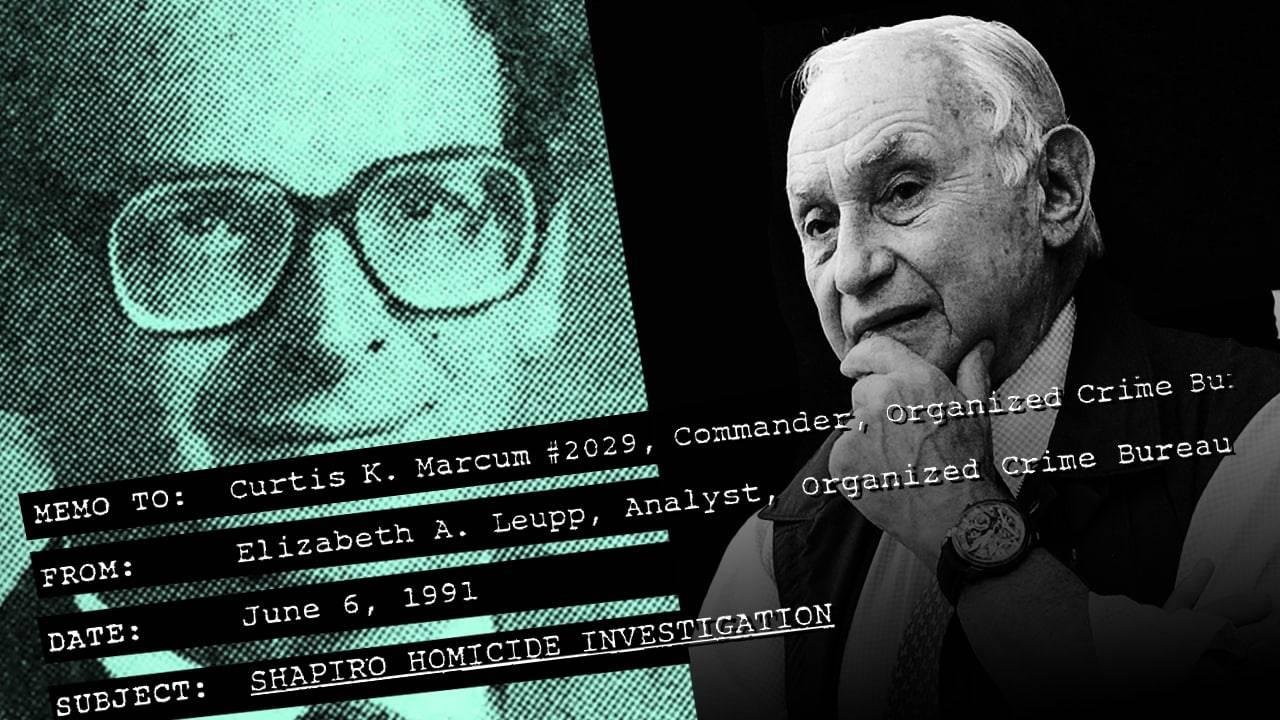
Wexner and Kessler may have wanted to exert such extensive control over this influential Columbus suburb for others reasons, too. Shortly before the New Albany Company was created, both Wexner and Kessler found themselves under investigation for ties to the “mob-style” murder of Arthur Shapiro, who was due to testify to the IRS just days after his murder. Shapiro had been the lawyer for Wexner’s company The Limited and was involved in its finances.
In investigating Shapiro’s death, there was “some conjecture that Shapiro was in a position to provide information to the [IRS] Grand Jury that would have been damaging to some other party.” Columbus police then determined that Wexner was enmeshed with organized crime interests. However, the investigation into Wexner and any linkages to organized crime were halted and the police documentation from that investigation was heavily suppressed by the Columbus Chief of Police at the time, James Jackson. When the documents later became “accidentally” public via a FOIA request, Jackson was surprised and remarked that “I thought I got rid of it” with respect to the documents in question. Those documents will be referred to as the Shapiro Murder File for the remainder of this article.
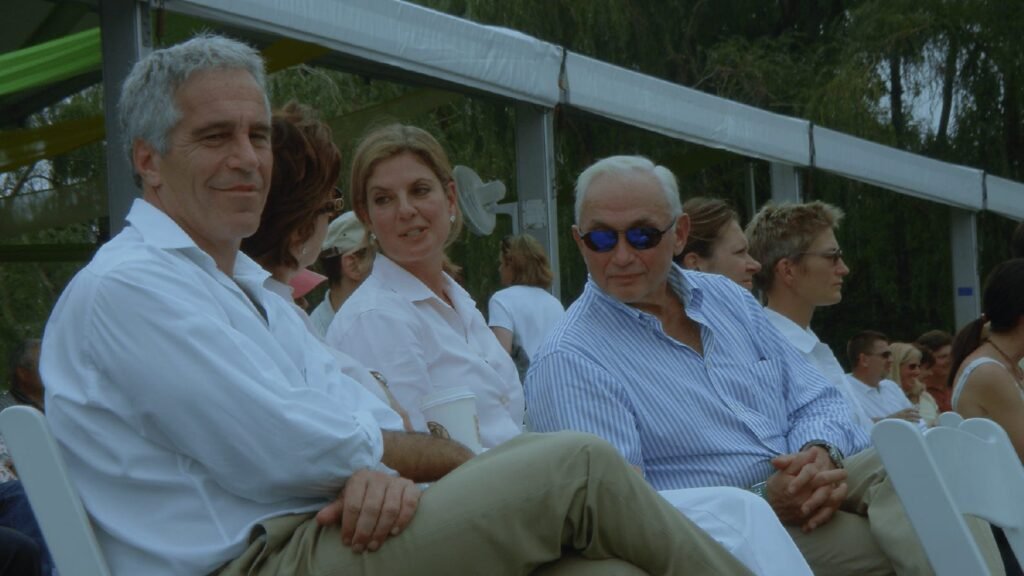
By the late 1980s, Jeffrey Epstein –– who by then had crept into Wexner’s inner circle –– had become a general partner in New Albany’s real estate holding company, New Albany Property, and had put at least a few million dollars into the project. Former State of Ohio inspector David Sturtz reportedly claimed that Jeffrey Epstein was Shapiro’s “replacement.” In addition, local Ohio reporter Bob Fitrakis told New York magazine in 2002 that Epstein had been a crucial part of the New Albany project:
Before Epstein came along in 1988, the financial preparations and groundwork for the New Albany development were a total mess […] Epstein cleaned everything up, as well as serving Wexner in other capacities.
Fitrakis also stated that New Albany’s success had required significant changes be made to Columbus city policy as well as zoning laws. As attested to in the Shapiro Murder File, this appears to have been accomplished by questionable investments made by a Wexner-controlled entity in a jazz club run by a former City Council member, Jeremy Hammond, alongside his successor on the council, Les Wright. The File also details circumstantial evidence that Hammond was able to make payments on luxury assets and goods well above his salary, which was suggestive of bribes. As luck would have it for Leslie Wexner, Hammond became “swept up in an emotional debate about the Wexley luxury housing project [a reference to the New Albany project] in 1988” and was accused of selling out the city’s and public’s interest for Wexner’s benefit. New Albany, thanks in large part to Hammond and Wright, was able to secure its desired changes to local policy. However, accusations that New Albany’s projects and ambitions was acting in defiance of existing state and local laws would continue for years.
In 1990, Epstein acquired property in New Albany via a Wexner-controlled trust, with the house being widely reported as a “gift” from Wexner to Epstein. Epstein resigned from the trust and bought the home, which he owned from 1994 until 2007, when he and Wexner publicly cut ties after Epstein’s first arrest that same year. However, recent releases have shown the two men stayed in contact years after. Epstein subsequently sold the house in New Albany to the Wexners that year for a reported $0.
In 1992, Epstein obtained another property in New Albany, this time via a trust linked to John Kessler. Former Epstein employee Maria Farmer filed a lawsuit alleging that she was attacked by Epstein at the property in 1996, and that Wexner’s security prevented her from leaving the home for close to 12 hours. A Washington Post report confirmed that Wexner’s security team “monitored” the home when Epstein owned it. Epstein sold this property in 1998 to a company called HHD & B LLC, which has the same mailing address as the New Albany Company, suggesting they were connected. That same year, Epstein was listed as co-president, alongside Leslie Wexner, of the New Albany Company.
Beginning in the early 1990s, Epstein was also president of the New Albany-based N.A. Property Inc., which early records also refer to as part of the Wexner Investment Company. Later records show that it had also used the name the New Albany Investment company (as well as New Albany Investments). The Wexner Foundation later referred to Epstein’s role as president at N.A. Property as being one of his “Wexner-related roles.” Though the Wexner Foundation claims that Epstein resigned from that role in 2007, he was not removed as the company agent until 2008. Despite Wexner’s previous claims that Epstein “stole” his money and that they had broken off all association the year prior, recent releases have shown that Wexner was still in communication with Epstein during that time.
According to a 2002 New York magazine profile, Epstein maintained a branch of his financial advisory firm in New Albany. The article notes that Epstein’s presence in the Columbus suburb was incredibly strong in 2002, and that Epstein’s staff for his financial advisory firm were spread between Manhattan, New Albany and the USVI. The report notes that he had “reincorporated” this company as Financial Trust Co., based in the USVI. Financial Trust Co. and its successor Southern Trust, were alleged by USVI authorities to have served as cover for Epstein’s illicit activities. Southern Trust later became intimately involved with the use of Artificial Intelligence (AI) in financial markets, with goals to expand into healthcare. It is unknown for how long Epstein’s Financial Trust Co. and its precursor maintained its New Albany branch, though it is likely related to the aforementioned N.A. Property/New Albany Investment Company, which –– as noted above –– was also an entity connected directly to Wexner.
In the years that followed Epstein’s supposed break from Wexner, records show that Gary Kerney, the former CEO of the New Albany Company Limited Partnership, managed multiple Epstein properties, including now infamous properties in New Mexico and the USVI. The two men had met in New Albany via their roles at the New Albany Company. Kerney started managing properties for Epstein at least as early 1999. Roughly a decade later, in 2009, Kerney recruited Stephen Caplinger, the former New Albany director of planning and design, to help Epstein further develop Little St. James, Epstein’s infamous island. That same year, Kerney was listed as the island’s construction manager and was one of four people, including Epstein himself, that had an affiliated credit card. According to reports, by 2010, Kerny was making roughly $368,413 per year between his salary, housing stipend and travel costs. This would make him Epstein’s second-highest paid employee at that time. Kerney wasn’t the island’s only long-term connection to New Albany either, as the island was insured by the New Albany-based Insurance Office Central Ohio through at least March 2019.
Epstein’s extensive ties to New Albany, as detailed above, lend credence to Ghislaine Maxwell’s more recent statements to Todd Blanche, the current deputy Attorney General, that Epstein “ran” New Albany for much of the time she was affiliated with him, despite Wexner’s repeated downplaying of his role.
From “Silicon Valley” to the “Silicon Heartland”
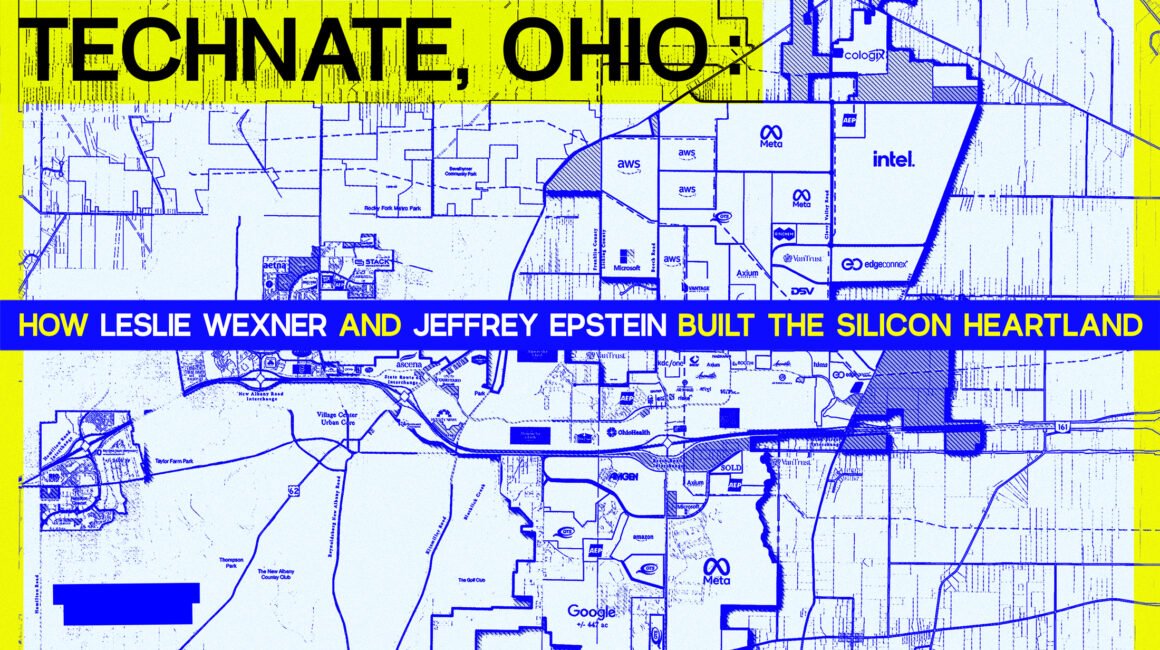
In the decades after Wexner, Kessler and Epstein first dug in, New Albany has since emerged as the premier locale in the United States for the booming data center industry. In 2014, the first notable data center moved into the Ohio River Valley, with Compass Datacenters spending $60 million to place five data centers on a 9.2 acre parcel of land within New Albany Business Park. The New Albany Business Park is especially relevant to Wexner as it is owned by his New Albany Company. It is also home to Wexner-linked corporate data centers, including Wexner’s Abercrombie & Fitch. Shortly after Compass Datacenters joined the neighborhood, Amazon Web Services (AWS) built three campuses in New Albany, followed quickly by Meta (then Facebook) and Google each adding a campus in New Albany.
Compass Datacenters expanded their operations into Canada and Israel in 2019, with the latter coming to fruition through a partnership with AWS and after the Azrieli group purchased a 20% stake in the company. The Azrieli Group was founded by the Israeli-Canadian tycoon David Azrieli and went on to be the largest IPO ever on the Tel Aviv Stock Exchange in 2010. It has since grown into Israel’s largest commercial real estate developer. The Azrieli Group is a known partner of another Canadian family dynasty – the Bronfmans, who boast significant ties to both Wexner and Epstein.
As it stands today, Amazon, Google, Microsoft and Meta all have data centers or commitments to build data centers within New Albany, Ohio. In addition to the data centers, Central Ohio has also welcomed a commitment from Intel to build one of the largest semiconductor factories in the world. This decision was made in no small part due to the state offering nearly $2 billion in incentives and tax breaks for the California-based Intel, including “a 30-year tax break” approved by state legislators allowing “Intel to save $650 million.” In February 2026, Intel announced delays until 2030 regarding this project. New Albany executives have described the Intel deal and the influx of Big Tech data centers as necessary to establish the “Silicon Heartland” in Ohio, with New Albany at its center.
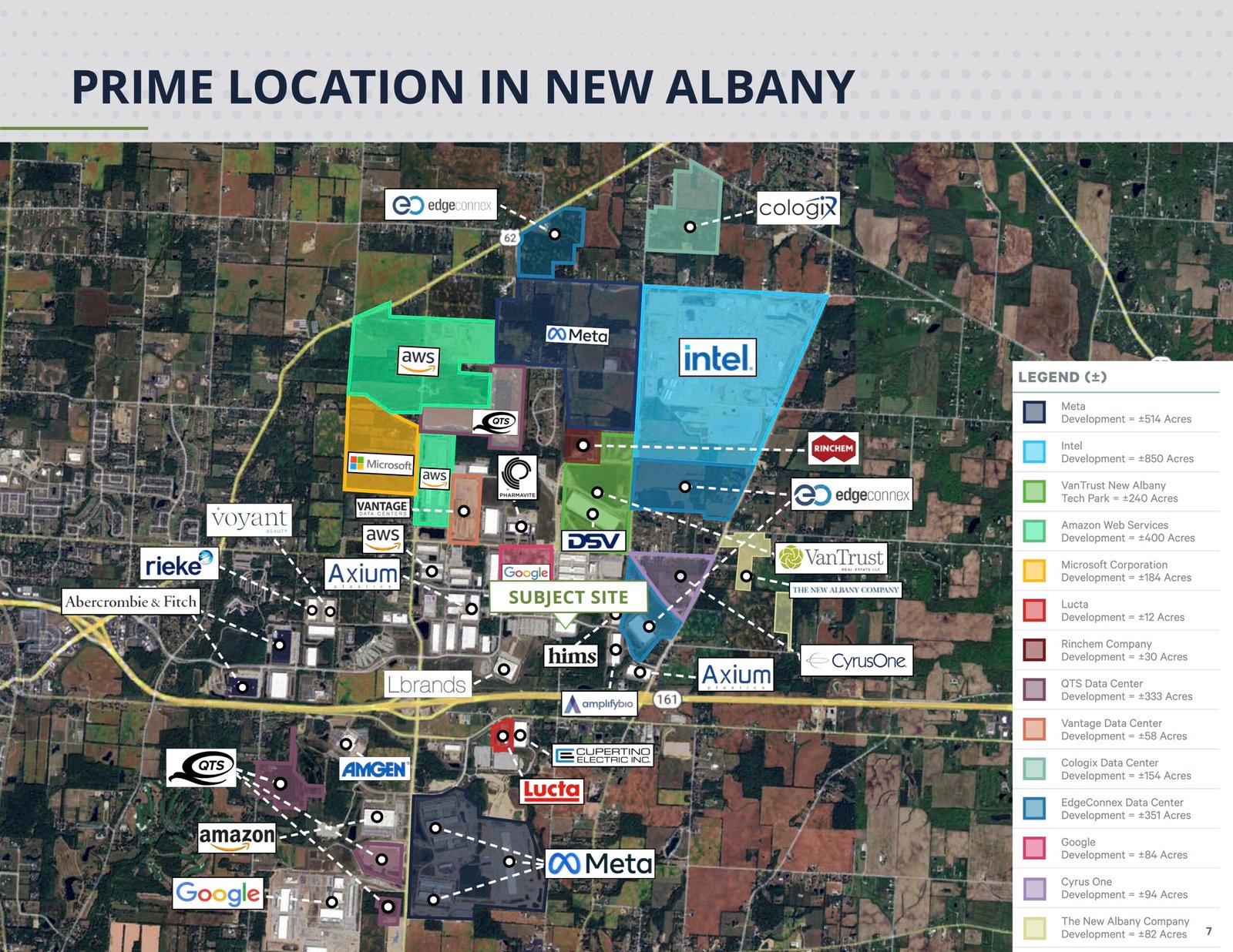
Incidentally, Wexner and the New Albany Company played an intimate role in helping seal the Intel deal in Ohio. It was representatives of the New Albany Company who approached the once quiet town of Johnstown, offering to pay upfront for hundreds of acres in and around town. They paid well over market rate and many sold their properties for over a million dollars, though they had to sign nondisclosure agreements with the New Albany Company to lock in those prices. A few months after these deals were finalized, it was announced that Intel was planning to build its new semiconductor factories in that exact area. “It [the Intel deal] wouldn’t have happened without them,” J.P. Nauseef, the CEO of JobsOhio, the state’s private economic development group, told Forbes. JobsOhio, incidentally had secured a $150 million grant that paid for the land for the Intel factories, which formed part of an incentive package from the State of Ohio totaling over $2 billion. JobsOhio, a controversial “dark money” organization, is discussed in detail later in this piece.
Like other tax incentives prepared by the State to benefit Wexner-connected business deals, Ohioans are unlikely to reap any of the alleged benefits they will receive. Indeed, with New Albany’s data center growth long promoted as essential to the economic well-being of state residents, most Ohioans have instead only received engorged electricity bills despite the billions in taxpayer-funded incentives these large tech conglomerates have received. While Ohioans are turning out in record numbers to oppose building even more data centers, Ohio state legislators have responded by introducing legislation to create a new commission that would help “dispel inaccurate myths” about bringing more data centers into the state, particularly data centers planned to be built on land developed by Wexner’s New Albany Company.
In addition to Wexner’s direct ties to bringing Big Tech giants to New Albany, there is also an important possibility that Epstein himself helped sow the seeds for their presence in the Wexner-dominated Columbus suburb as well. For instance, during the time that Epstein was intimately involved with New Albany and allegedly “ran” it for Wexner, he was the main (and some years, the only) donor to the Edge Foundation. The Edge Foundation, beginning in 1999, was the host of the influential Billionaire’s Dinner, in which Epstein was involved from its inception. From 2001 to 2017, overlapping several years with Epstein’s deep involvement in New Albany, Epstein funded $638,000 out of the total of $857,000 raised by Edge during that period. Subsequent reports have alleged that Edge’s Billionaire’s Dinner was an “influence operation” ran for Epstein’s benefit.
Notable attendees of those dinners at the time Epstein was Edge’s most influential donor include several of the founders of major Big Tech companies that installed themselves at New Albany during and shortly after that period of time. Those founders include Jeff Bezos of Amazon and Google co-founders Sergey Brin and Larry Page. Bezos developed close ties to Epstein’s “fixer” Ghislaine Maxwell while Brin and Page were both subpoenaed as part of the USVI case against JP Morgan regarding the bank’s alleged facilitation of Epstein’s sex trafficking activities. These subpoenas were issued because Epstein allegedly led the Google co-founders to bank with J.P. Morgan and Epstein helped advise Brin on structuring trusts for his children.
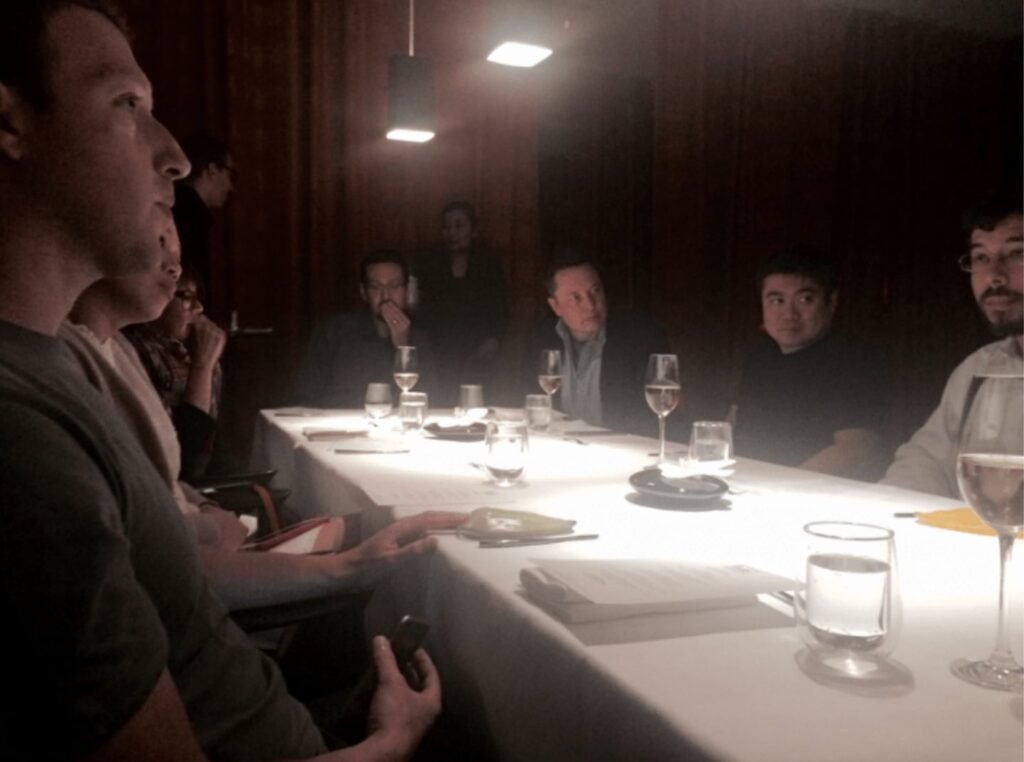
In addition, Epstein attended a 2015 dinner meeting brokered by Reid Hoffman and Peter Thiel where Mark Zuckerberg of Meta/Facebook was in attendance. Thiel was considerably close to Epstein during this time and beyond and was also an extremely influential early investor in and board member of Meta/Facebook. Thiel’s Epstein ties, combined with Zuckerberg’s own meeting with Epstein, could have played a role in Meta’s decision to establish a presence in Wexner-dominated New Albany in 2017. Last year, Meta announced that they would build yet another data center, promoted as the highest capacity data center in the world, in Wexner’s fiefdom.
How Wexner Designed Ohio’s Corporate Welfare System, Funded by Taxpayers
The question thus remains: Why Central Ohio? New Albany was hardly a formidable city before Wexner and Epstein located their business dealings there, with a population of just over 1,500 citizens in 1990. By 2000, it had grown to just over 4,000, and has seen a 180% growth since –– leaving the small but powerful suburb of Columbus sitting at a population of around 11,000 people today.
Reporting from Data Center Frontier in 2024 speculates as to why this region was chosen to house so many data centers. Historically, this parallel was of systemic importance to the Union Pacific Railroad system, and fiber providers such as AT&T, Verizon, Comcast and more, ran their broadband cables alongside the rails of the first transcontinental railroad. According to a LinkedIn post by current Oracle employee and former Program Manager of Microsoft’s Cloud Developer Services, George Moore, “this fiber optic infrastructure provides the data centers with unprecedented access to the absolute highest bandwidth in a virtuous cycle of investment: more data centers drive more traffic, which drives more fiber optic cables, which drives more data centers.”
Not to remain a speculative theory, this flywheel of data center build-outs pushed by fiber optic growth, as described by Moore, has driven Ohio to become a “leading state for data centers.” According to reports from DataCenterMap.com, Ohio is currently home to 193 data centers, making it the fourth ranked state in the country behind Virginia, Texas and California. It now boasts more date centers than its neighboring states –– Pennsylvania, Michigan, and Indiana –– combined. Well over half of these data centers are situated in Central Ohio, with 121 and counting in the Columbus/New Albany area.
Unsurprisingly, the New Albany Company views itself as being central to Ohio’s transformation. For instance, the company’s current CEO Bill Ebbing told Forbes that “the establishment of the ‘Silicon Heartland’ [in New Albany] will redefine Ohio’s economic future, providing generational job opportunities while helping to reduce the country’s dependence on foreign manufacturing of semiconductors,” referencing Intel’s planned New Albany-based plant.
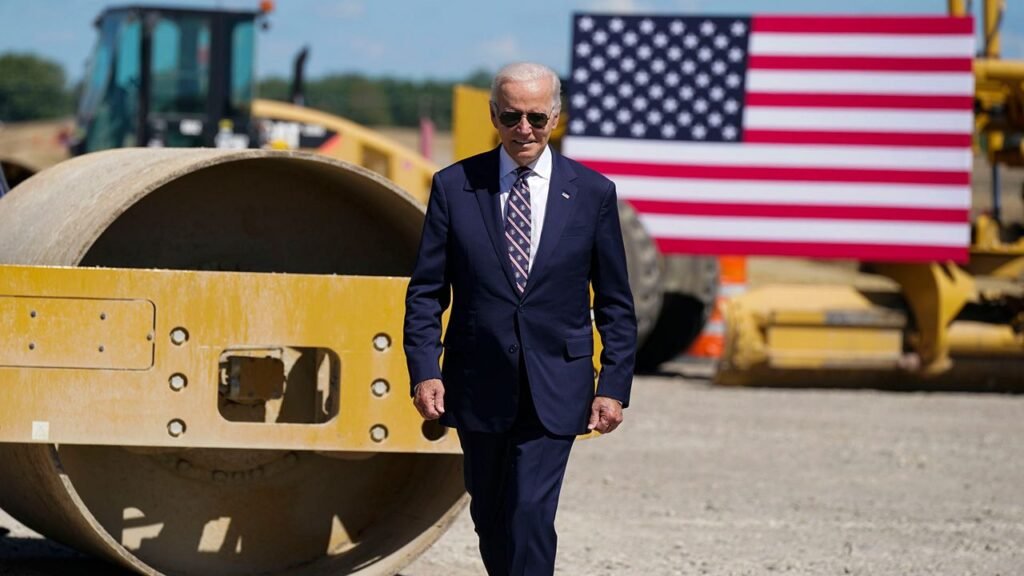
As a result of New Albany’s efforts, Ohio has now “taken center stage as the hub of the Midwest Semiconductor Network (MSN).” That network is notably led by Ohio State University, which is deeply connected to Wexner, and “fueled by federal investment through the [Biden-era] CHIPS and Science Act.”
It isn’t just federal taxpayer funds that are fueling the construction of the “Silicon Heartland” right where Wexner conveniently wields such power. Another reason for Ohio becoming “the epicenter” for data centers is because of the unprecedented ways in which Ohio’s private sector, led by Wexner-linked entities, has been able to divert Ohio taxpayer funds to heavily subsidize the development of the state’s “Silicon Heartland.”
After re-making what was once the village of New Albany into a public-private partnership under his control, Wexner turned his sights to the far larger, neighboring city of Columbus, the Ohio state capital. In 2002, Wexner and Kessler teamed up with the long-time publisher of the Columbus Dispatch, John Wolfe, to create the Columbus Partnership. It is worth noting that Wolfe was very enmeshed with Wexner, serving on the board of the Wexner Center Foundation from 1990 to 2016. Wexner chaired the Columbus partnership for nearly twenty years, stepping down in 2021.
The partnership describes itself as a “a nonprofit organization of CEOs from Columbus’ leading businesses and institutions.” In reality, it is the de facto economic development authority for the Columbus region, which includes 11 counties in and around the city. In fact, the Columbus Partnership created Columbus 2020, which later became One Columbus –– now the official economic development group of the Columbus region. One Columbus is also a public-private partnership that is largely funded by private corporations with a significant presence in Ohio, including J.P. Morgan, Honda, AT&T, Bank of America and, of course, L Brands –– the Wexner-controlled parent company of The Limited. Several of its current investors are Big Tech firms like Amazon who have become deeply entrenched in Wexner’s New Albany. One Columbus also developed the local government’s current economic roadmap, which is “aggressively focused” on economic growth benefiting its corporate partners.
One Columbus’ partnership with local governments in the area has allowed them to offer the companies they court, many of which are foreign-owned, large incentive packages that are funded by public money. Several of the businesses they court move to New Albany. Those companies are attracted by these generous taxpayer-funded incentives and then purchase commercial real estate, most often from Wexner’s New Albany Company. The use of over-the-top incentives for corporate relocation to Columbus has been engineered by Wexner many times in the past, such as in the Wexner-backed effort to bring the CIA-linked Southern Air Transport to Columbus in the 1990s (discussed later in this article). Ultimately, the creation of the Columbus Partnership/One Columbus allowed him to both formalize and normalize arrangements like this that were once the product of backroom deals.
The Wexner-dominated Columbus Partnership has also produced another affiliate organization, Smart Columbus, which is focused on making Columbus a “test city” for other smart cities in the United States. Smart Columbus is another public-private partnership between the Columbus Partnership and the City of Columbus. One its goals is to end the use of privately owned conventional cars in the city, replacing it with electric public transportation. The organization was created in 2016, after the city received a $50 million Department of Transportation grant to aid that effort, along with millions more from the family foundation of Microsoft co-founder Paul Allen. This goal is notably analogous to a goal promoted by the U.S. government’s National Security Commission on AI, whose members included U.S. intelligence officials and representatives of Big Tech firms, including those which own major data centers in New Albany.
Wexner’s Columbus Partnership is also a network partner of an organization called JobsOhio. JobsOhio’s other regional partners, which are seven including the Columbus Partnership, are public-private partnerships or private sector-led nonprofits essentially modeled after the Columbus Partnership, but focusing on different areas of the state. As noted earlier, JobsOhio prepared the large incentive packages for the Intel-New Albany deal as well as the more recent Anduril deal (discussed in a later section of this article), among many others.
JobsOhio is a very controversial organization. Created in 2011, it is the privatized replacement of the Ohio Department of Development that takes in money from what was once a public asset, Ohio’s state liquor tax, which it leased the rights to through 2039 for $1.4 billion. Its lease was outrageously extended through 2053 at no additional cost to JobsOhio by the Ohio Controlling Board last year. Four years after it was created, it took in well over the $1.4 billion it had paid for those rights. Those funds, which would have otherwise gone to fund the public sector, have ostensibly been spent on “economic development.” However, JobsOhio has been unable to produce data to back up its bold claims about job creation. While it is unknown how many jobs the group actually added, what has provably stacked up over the years are the group’s known expenditures.
In addition, as a private corporation, JobsOhio is not required to show how the funds it takes in from the liquor tax are spent. It also oddly pardoned delinquent loans tied to a massive state bribery scandal (see the next section of this article) and has been tied to other scandals, such as that involving former Ohio State University president Ted Carter.
The large incentive packages of taxpayer money JobsOhio has awarded to corporations ultimately come down to a large corporate welfare scheme that is directly financed by regular Ohioans. Currently, JobsOhio is chaired by a corporate lobbyist closely tied to current Ohio governor Mike DeWine.
The problems with JobsOhio were succinctly summarized by the Ohio Capital Journal, which noted that, shortly after JobsOhio was created:
[…t]he group ProgressOhio immediately sued, claiming the JobsOhio scheme violated several provisions in the state constitution prohibiting the state government from giving special treatment to a single corporation, including by extending credit to it. The Ohio Supreme Court threw out the suit, saying those who brought it didn’t have standing to sue because they didn’t show that they were personally harmed by the creation of JobsOhio.In a dissent, then-Justice Bill O’Neill was appalled.
‘Hundreds of millions of dollars in public funds are being funneled into a dark hole to be disbursed without public scrutiny, and the highest court in the land is looking the other way,’ he wrote. ‘The Supreme Court of Ohio is the last house on the street, and passing on this case is an abdication of our duty as protectors of the Constitution.’
Today, JobsOhio is another node in the latest iteration of the model first developed by Wexner and Kessler in the Columbus region. Corporate-controlled public-private partnerships in each region are now partnered with JobsOhio, which funnels what was once public money with zero transparency into the hands of corporations doing business in the state. While these incentives are often framed as essential to “creating jobs,” research has shown that, in about 75% of cases, the incentives packages like those developed by JobsOhio would not have influenced the company’s decision to settle or expand in the state.
JobsOhio was notably created by legislation signed into law by former Ohio governor John Kasich in 2011. That year, Kasich brought on venture capitalist Mark Kvamme to get JobsOhio “off the ground.” Kvamme was a veteran of Sequoia Capital before moving to Ohio to co-found the VC firm Drive Capital. Kvamme had donated $1.35 million to Kasich’s gubernatorial campaign prior to Kasich choosing him to set up JobsOhio. Kvamme’s more recent activities, including those directly linked to the New Albany Company, are discussed in detail in the next section.
In addition to the donations from Kvamme, the coffers of many of Kasich’s political campaigns, as well as those of the state’s Republican Party, have long been filled by Wexner, who has historically been the main political donor in the state for right-leaning politicians. However, Wexner also donates to Ohio Democrats. Kasich also received 35 “gifts” from Wexner in 2010, the year before he created JobsOhio with Kvamme, but Kasich declined to disclose the nature of those “gifts.” In addition to those ties, Kasich also tapped Wexner directly in 2013 to aid the state’s “marketing effort” to businesses based elsewhere. According to reports, Kasich compared asking Wexner for help in this effort to “a quarterback getting advice from Super Bowl champion Peyton Manning.” When asked about Wexner’s ties to Epstein and why it had not hampered Wexner’s businesses in New Albany, Kasich responded that it was because New Albany operates “at the speed of business.” Notably, a few years later in 2016, long-time Jeffrey Epstein associate Gwendolyn Beck emailed Epstein about joining Kasich’s campaign as an advisor for a committee on aging. This clearly suggests that Epstein, at the time, had a direct line to Kasich’s campaign that year.
It is also important to note that, while JobsOhio rakes in billions in what was once Ohio public funds and while Wexner greatly influences public spending on economic development, Ohio has been forced to drastically cut funding for public schools, libraries, publicly-funded healthcare programs and much more. Furthermore, many of the companies enticed to the state, and the Columbus region in particular, are data centers, which have also been raising electricity costs across the state. They’ve also been linked to serious health issues. While JobsOhio would argue that those data centers create jobs, the vast majority of the jobs they do create are temporary as they are construction jobs that predictably disappear once a data center is built. Public outrage against data centers have grown in the state as a result, with the state legislature recently voting to end some of the state subsidies that help Wexner’s New Albany, and other areas in the state, court them. Despite this legislation passing, Mike DeWine recently used a line item to veto to quietly allow those subsidies to continue.
InnovateOhio and the O.H.I.O. Fund
As Kasich was leaving the governor’s office in January 2019, he signed off on the creation of a new government agency called InnovateOhio. His successor, Mike DeWine and his Lieutenant Governor John Husted, both of whom have been heavily funded by Wexner, oversaw the agency’s efforts to “modernize” the state of Ohio’s public services. Not unlike the pitches for JobsOhio and related groups, the retooling of Ohio public services to be as digital-focused as possible was deemed necessary in order to “make the state attractive to outside business.” In April 2019, Mike DeWine issued an order forcing all state agencies, boards, and commissions to adopt and use InnovateOhio.
The initial board of InnovateOhio included Mark Kvamme, who had helped create JobsOhio, as well as Ohio businessman turned Ohio Senator Bernie Moreno and venture capitalist and current Vice President J.D. Vance. Moreno’s campaign, financed in part by Wexner, was notably dogged by accusations that he used his position on the board of InnovateOhio to boost a blockchain company in which he had held a large stake. Other notable founding members of the board at InnovateOhio included the head of U.S. intelligence and defense contractor Battelle, whose Columbus area facility was the alleged source of the anthrax used in the 2001 anthrax attacks. Vivek Ramaswamy, currently running to be the new governor of Ohio after DeWine, also joined the board of InnovateOhio after its founding. As part of its mandate, InnovateOhio laid the infrastructure for and then established digital identity via the OHID system for every Ohioan hoping to access state public services.
InnovateOhio’s advisory board is currently chaired by Falon Donohue, who co-founded Narya Capital with current US VP J.D. Vance and former Mithril Capital partner Colin Greenspan. Mithril is closely linked to tech billionaire Peter Thiel, whose deep ties to Epstein have been further illuminated by recent releases. Vance is also a Mithril alum and Thiel played a pivotal role in launching his political career. Narya has invested heavily in Vivek Ramaswamy’s Strive Asset Management, which has also received funding from Cantor Fitzgerald, whose long-time head Howard Lutnick is the current Commerce Secretary under Trump. Lutnick’s sons are currently running Cantor.
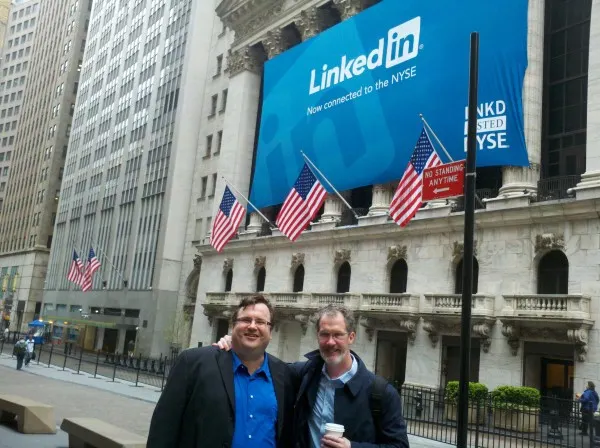
As previously noted, venture capitalist Mark Kvamme was central not only to the creation of JobsOhio but also to the early years of InnovateOhio. Prior to moving to Ohio while at Sequoia Capital, Kvamme was one of the earliest backers and board members of Reid Hoffman’s LinkedIn and has invested alongside Hoffman in other companies. Hoffman has since become infamous for his ties to Jeffrey Epstein.
The firm that Kvamme co-founded in Ohio, Drive Capital, received $50 million from Ohio State University (OSU) for one of its funds. Reports suggested the controversial decision to put so much of OSU funds into Drive Capital was related to Kvamme’s ties to Kasich as well as John Gee. At the time, Gee was serving as a member of OSU’s board of trustees while also serving as a director of Wexner’s The Limited. Gee had also taken Wexner’s spot on the board when Wexner stepped down in 2012. OSU is also heavily funded by Wexner family donations. In addition, Kvamme sat on the board of the Wexner Center for the Arts, which is chaired by Wexner.
Kvamme has since developed what he refers to as Ohio’s own “sovereign wealth fund” modeled after Singapore’s state-owned investment company Temasek. That fund, called The O.H.I.O. (Ohio High-growth Investment Opportunities) Fund has raised hundreds of millions of dollars from Ohio-based investors whose identities have not been disclosed by the fund. The fund does have an advisory board of several prominent Ohio businessmen, each from a major Ohio city. Notably, the businessman chosen by the fund to represent Columbus is Alex Fischer, the former CEO and president of the Wexner-founded Columbus Partnership who is currently a partner at Wexner’s New Albany Company. Notably, the O.H.I.O. Fund has backed a recently approved New Albany development called the New Albany Innovation Center that is marketed by Wexner’s New Albany Company as one of the key “incentives” for business considering moving to the Columbus suburb he largely controls. In addition, the O.H.I.O Fund’s first big investment was the purchase of a large, 148-acre property roughly 12 miles away from New Albany in Sunbury, OH. The property is part of the Sunbury Business & Technology Park. The Sunbury Business & Technology Park, soon to be home to a massive $2 billion Amazon data center, is being developed by Wexner’s New Albany Company.
The O.H.I.O. Fund has also contributed significant sums to Narya Capital, the VC firm co-founded by Vice President J.D. Vance. Kvamme, who created the fund, has been a major fundraiser for Vance’s political campaigns. Kvamme, importantly, has his own political ambitions.
That isn’t the only investment that the O.H.I.O. Fund has made with ties to the current Trump administration. The fund recently teamed up with Terry Coyne, vice chairman of the Cleveland office of Newmark, to find the “next Anduril” to fill a large property near Columbus’ Rickenbacker Airport. Newmark’s recent acquisition of this land near Rickenbacker Airport neighbors the site chosen for military contractor Anduril’s planned large drone factory (discussed later in this article). Anduril was created by two figures close to Peter Thiel as well as J.D. Vance: Palmer Luckey and Trae Stephens.
The O.H.I.O. Fund is the only member of the group of investors behind Coyne that Coyne has chosen to disclose. Newmark, who owns the land in question and employs Coyne, is a subsidiary of Howard Lutnick’s Cantor Fitzgerald. The New York Times recently reported on how the Lutnick family and Cantor have been “cashing in” on A.I. data centers around the country, with the Columbus region apparently being no exception. Lutnick was very close to Wexner’s former money manager Jeffrey Epstein, who was Lutnick’s long-time neighbor and also his business partner. Epstein also hosted Lutnick at his infamous island.
The Power Behind The Power
The boom in AI data centers across the United States has also spurred a “renaissance” in nuclear power, as data centers continue to drive the country’s surging power demands. Ohio is, of course, no exception. However, unique to Ohio is the fact that the state’s largest corruption scandal ever is intimately linked to the state’s nuclear power industry and those seeking to further expand the “Silicon Heartland.”
In July 2020, five Ohioans were charged with racketeering in what has been described as “likely the largest bribery, money laundering scheme ever perpetrated against the people of the state of Ohio.” This scandal led to the arrest of then-Ohio House Speaker Larry Householder, Ohio Republican Party Chairman Matt Borges, Householder’s adviser Jeffrey Longstreth, and two Ohio-based lobbyists, Neil Clark and Juan Cespedes. The five men were found to be complicit in distributing bribes to members of the House in order to pass a controversial law that led to the bail-out of two aging nuclear power plants and two coal power plants paid for by “utility ratepayers” (i.e. regular Ohioans paying utility bills). The two Ohioan nuclear power plants, Perry and Davis-Besse, received a $150 million per year subsidy due to the passing of this law, known as House Bill 6 (HB6). The two nuclear power plants central to this scheme were owned by Energy Harbor, which was previously known as FirstEnergy –– the very company found guilty of bribing Ohio officials in order to ensure their hefty bailout.
Central to the bailout was the successful campaign by Larry Householder to take his position as the Speaker of the House. Householder had secretly controlled a 501(c)(4) non-profit called Generation Now, into which FirstEnergy had funneled around $60 million between March 2017 and March 2020. According to U.S. Attorney David DeVillers, who charged the five men, there was “no mistake, this is Larry Householder’s 501(c)(4).” Reporting from NPR in July 2020 stated that DeVillers had alleged that “the money from the scheme was spent to the detriment of other political candidates and the people of Ohio.” The prosecutors claimed that “members of Householder’s enterprise used those payments for their own personal benefit and to gain support for Householder’s bid to become speaker.”
According to the complaint filed in July 2020, during “the Spring and Fall of 2018, the Enterprise [Generation Now] spent millions in Company A [FirstEnergy] money to support House candidates involved in primary and general elections whom the Enterprise believed both would vote for Householder as Speaker and, ultimately, would follow his lead as Speaker and vote for bailout legislation” benefitting FirstEnergy. The company had notably announced it was closing nuclear plants and declaring bankruptcy shortly before, in March 2018. In exchange for these payments, Householder and his co-conspirators helped pass House Bill 6 (HB6). They also subsequently defeated a ballot initiative to strike down the law after its successful passing. The complaint confirms that Householder-backed candidates that had received money from FirstEnergy via Householder’s Generation Now organization helped elect Householder, who introduced the bill just three months into his term. As a result of this legislation, FirstEnergy’s $60 million racketeering scheme went on to be worth $1.3 billion. The aforementioned JobsOhio had lent FirstEnergy $12 million in 2015, but oddly chose to forgive the loan two years later.
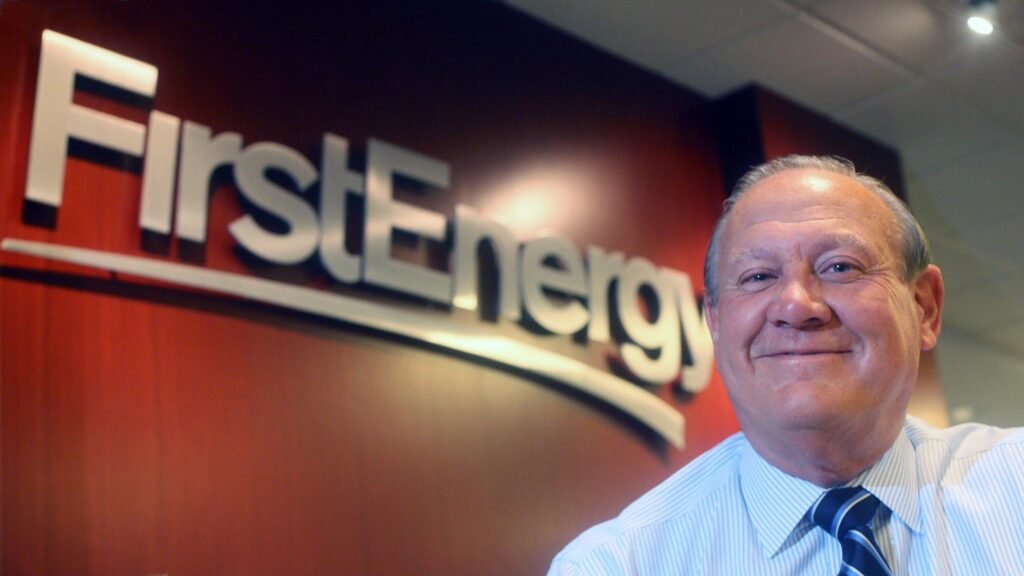
As noted above, FirstEnergy sent “regular payments to Householder’s secret company,” Generation Now, beginning in March 2017. These payments began just a few months after Householder had accompanied FirstEnergy employees on their company jet. The payments from FirstEnergy to Householder increased after HB6 was introduced, including an $8 million wire to Generation Now in May 2019. This money was apparently used to help manufacture consent for the bailout via mailers and advertising, in addition to their own personal enrichment and benefit. The bill was passed by a 51-38 vote and promptly signed by Ohio Governor Mike DeWine. When a campaign was organized to overturn the law via a ballot initiative, FirstEnergy wired Generation Now an additional $38 million between July and October 2019.
Over the course of this three year period, FirstEnergy sent $60 million to essentially purchase the billion-dollar bailout. State prosecutors described the payments as “akin to bags of cash — unlike campaign or PAC contributions, they were not regulated, not reported, not subject to public scrutiny — and the Enterprise freely spent the bribe payments to further the Enterprise’s political interests and to enrich themselves.”
While certainly a notable story onto itself, with numerous implications for the state’s booming data center industry, there are multiple connections between the parties involved to the decades-old effort by Epstein and Wexner to build out New Albany, Ohio.
Neil Clark, a long-time lobbyist in Ohio and one of those charged with racketeering in 2020, was an essential figure within the scheme. During conversations with Householder which were recorded by the FBI, Clarke self-described himself as “Householder’s proxy,” and also claimed that the “dark money” at their disposal was “unlimited.” Clark was also recorded saying that “we call Company A [FirstEnergy] the bank… they can fund these things for 20 years if they want to… they’ve got too much money, too much power.”
In 1999, Clark formed State Street Consultants, an Ohio-based powerhouse lobbying firm, with former Ohio Democratic Party Chairman Paul Tipps. The firm grew into the largest government affairs consulting firm in Ohio, but not before both Tipps and Clark had spent years lobbying on behalf of Wexner’s Limited Brands, and the Epstein-Wexner run New Albany Company. During this period, Wexner was working with the lobbying firm The Success Group (to be discussed later), in addition to Tipps and Clark, to “persuade the (Ohio) legislature in 1990 to put an amendment into an unrelated bill that, in essence, allowed his company [New Albany Company] to create its own government within the development…The change enabled the private government to tax new residents, issue bonds and essentially control almost all the area.”
In 1992, Wexner sought an amendment to a state law preventing his golf course, the New Albany Country Club, from reapplying for a liquor license during a four-year wait after previously being denied said license. Clark, alongside his future partner Tipps, represented Wexner’s attempt to circumnavigate this long wait, with Clark noting he provided the services pro-bono. As a charter member of Wexner’s club, Clark expressed that he “might like to have a cocktail after I play 18 holes of crappy golf.” The same year, Clark and Wexner co-hosted a controversial fundraiser for then-President George H. W. Bush’s reelection campaign as well as Ohio House Republican campaigns.
In 2021, shortly before he was due to arrive in court in relation to the HB6 scandal, Clark revealed he was “working on a tell-all book of stories from his decades-long career as a lobbyist,” according to reporting from Fox. Clark furthered that he wanted to “set the record straight about what I did during my 40 years in the Statehouse,” and that he “say[s] things that people are going to be shocked about.” He told reporters the book was “nearing publication” in February 2021. A month later, in March 2021, Clark was found dead from a bullet wound to his head in a wooded area near his Florida home. The death was quickly ruled a suicide by local authorities. Sadly, Clark was not the only person tied to this scandal who would be be found dead by “suicide.”
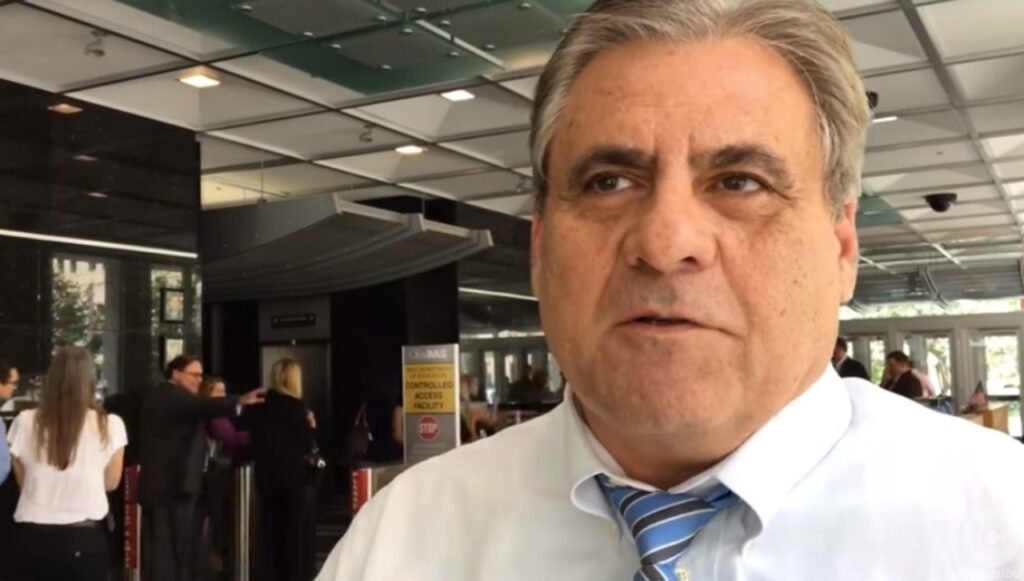
In April 2024, the former Chair of the Public Utilities Commissions of Ohio (PUCO), Sam Randazzo, was found dead in Columbus, Ohio. Randazzo had spent years leading the charge in Ohio to deregulate the energy grid, before forming the Sustainability Funding Alliance –– a corporation that had received payments from FirstEnergy in January 2019. The morning Randazzo was supposed to “check in with the court,” his body was found hanging in a building he owned.
Previously, Randazzo had pled not guilty to 22 state and 11 federal charges relating to his role in the HB6 scandal. According to reporting from NBC, Randazzo was accused of taking a $4.3 million bribe from FirstEnergy’s ex-CEO Chuck Jones and ex-Senior Vice President Michael Dowling in January 2019 for “consulting services” related to writing “parts of a law that would send millions of dollars in subsidies to FirstEnergy.” Randazzo had been appointed to PUCO by Governor Mike DeWine in 2019 shortly after accepting the payment from FirstEnergy. He became PUCO’s chair in April 2019 –– the same month that HB6 was introduced. According to the Ohio Capital Journal, Randazzo had received a total of $22 million in consulting fees from FirstEnergy, including the $4.3 million in 2019. That same year, in November 2019, Randazzo and PUCO issued a new order which granted FirstEnergy a “major win” that would have been “worth hundreds of millions of dollars.”
In 2021, DeWine came to Randazzos’ defense when “links first surfaced between Randazzo and FirstEnergy.” Randazzo was not the only personal appointment made by Governor DeWine involving one of the major players in the scandal.
In January 2019, at the onset of the House Bill 6 introduction, Governor DeWine appointed Dan McCarthy to serve as his Director of Legislative Affairs. McCarthy had founded a 501(c)(4) entity called Partners for Progress in 2017, which FirstEnergy used to funnel money during their bribery scheme related to HB6. According to reporting from Cleveland.com, McCarthy’s Partners for Progress received “$5 million from FirstEnergy in 2017,” and “over the next several months” distributed “$1.2 million of that money to organizations working to elect Householder as speaker,” including the aforementioned Generation Now. The group “later spent millions funding ads and taking other steps to pass House Bill 6.” Another board member for Partners for Progress was McKenzie Davis, who worked with McCarthy while he was President of The Success Group. McCarthy had left the Success Group to join DeWine’s administration. As it relates to the power nexus in Central Ohio, the Success Group had previously worked for Wexner’s The Limited in the 1990s, in addition to the Ohio Electric Utility Institute, the Ohio Coalition for Customer Choice in Electricity, and military contractor TRW.
Tangentially, TRW had acquired Cam Gears in 1965, the latter being a firm managed by Douglas Sims Leese and founded by Leese’s father. Leese became the International Vice President of Customer Relations for TRW the same year of the merger. Leese would later go on to hire Epstein in the early 1980s, and is believed to have played a crucial role in connecting Epstein to Saudi arms dealer Adnan Khashoggi and his former business partner Steven Hoffenberg.
Notably, The Success Group was founded and chaired by long-time Ohio Democratic figure Dennis Wojtanowski, who acted as its CEO from 1984 to 2003. Wojtanowski had previously lobbied on behalf of Sir James Goldsmith during a failed take-over bid of the Akron, Ohio-based Goodyear Tire. Wojtanowski had attempted to cover his business associations with the controversial Goldsmith by not registering Goldsmith as his client, but instead listed Hahn, Loeser and Parks –– a Cleveland-based law firm –– which had hired him on Goldsmith’s behalf. Wojtanowski’s associations with Goldsmith in the late 1980s are certainly prudent to the Epstein/Wexner take over of New Albany as Epstein was apparently first introduced to this elite power nexus at Goldsmith’s New York mansion in the early 1970s. Goldsmith was closely affiliated with Robert Maxwell and Rothschild banking interests as well as a member of the organized-crime-linked Clermont Club in the UK. Wojtanowski found himself embroiled in a previous lobbying scandal with Wexner which came to light in 1995, when the Ohio lobbyist hosted dinner parties at his home where he illegally distributed $500 checks to state legislators from six subsidiaries of The Limited. Previously, while a state representative, Wojtanowski had chaired the Citizens’ Commission on Nuclear Power in Ohio and was a key-figure in a 1970s effort to amend the method of how electricity utility companies calculate their rate base.
These scandals and their players have direct implications on the future of Ohio’s data center growth, and perfectly illustrate how a small group of businessmen and lobbyists can commandeer local and state government policy-making.
Securing Questionable Tax Exemptions is Easy in Ohio
In 2013, Ohio passed a sales-tax exemption that “covers computer data center equipment” in addition to “materials used in constructing the centers.” This tax exemption remains controversial, particularly given the increase in regional electricity prices and other issues that come with new data centers. According to a January 2025 report from Policy Matters Ohio, “if the investments announced by Amazon, Google, and Microsoft in the past two years are all covered by the tax break, the state and localities could lose out on almost $1.6 billion in sales-tax revenue, with only modest job-creation to show for it.” The positive regulation for the data center industry in Ohio does not stop there, with the report further noting the state’s unique property tax abatements:
In addition to the sales-tax exemption, many Ohio data centers also get local subsidies through property tax abatements. It’s worth noting that Ohio does not tax tangible property like data-center equipment. In Virginia, the largest site for data centers, Loudoun County, received more than $600 million in property taxes from data centers in 2023, the vast bulk of which was from taxes on equipment Ohio doesn’t levy. So Ohio is providing large, invisible subsidies in the form of lesser property taxes on data center equipment than some other states. Some of the data center operators also receive other state subsidies. For example, even prior to its recent announcement that it would invest another $10 billion in Ohio data centers, Amazon was getting a Job Creation Tax Credit, so it is credited with much of the state income tax paid by its data-center employees.
According to 2024 reporting from Cleveland.com, these “stadium-sized data centers” from “Amazon, Google and Meta, plus less familiar names like Quality Technology Services and CyrusOne” often only “employ 20 to 30 or so workers when operational,” with “some earn[ing] tax perks for promising as few as 10 new jobs.” For example, Amazon’s three data centers located in Dublin, Hilliard and New Albany received “about $100 million” in state subsidies according to a 2016 report from Good Jobs First. These tax breaks, while leading to minimal employment boosts, are no small factor within Amazon’s $7.8 billion plans to build more than two dozen data centers in Central Ohio. Final approvals for these tax exemptions are made by the Ohio Tax Credit Authority, which itself is a division of the Ohio Development Services Agency –– the Director of which is notably chosen by the Governor of Ohio.
Public sector subsidies and tax exemptions carry a unique history in Ohio, and have been routinely exploited by Wexner-controlled business interests for several decades. Take, for example, The Limited’s efforts to relocate the CIA’s Southern Air Transport to the Columbus-area Rickenbacker airport in 1995. Wexner’s The Limited Inc., then-under the power of attorney of Jeffrey Epstein, specifically sought out, not one, but two CIA-linked airlines to run its cargo during that period.
As noted in One Nation Under Blackmail, beginning in 1992, The Limited began to be linked to efforts of different airlines to relocate, or set up a major presence, at Rickenbacker. The first of these was the Russian state-owned airline Aeroflot, which created a North American subsidiary called North American Aeroflot (NAA). Wexner’s The Limited was the main force behind NAA and its activities at Rickenbacker. NAA’s activities at Rickenbacker also intimately involved Arrow Air, a CIA-linked airline that had smuggled weapons as part of the Iran-Contra operation.
Less than a month after NAA/Arrow Air began running cargo through Rickenbacker, the main CIA-linked Iran-Contra airline –– Southern Air Transport (SAT) –– began its own efforts to become the dominant force at Rickenbacker. SAT first cloaked its initial attempts via the company Polar Air Cargo, which was comprised of three companies: SAT, Polaris Corp. and NedMark. At the time, SAT had the same owner it had had during Iran-Contra, former CIA lawyer James Bastian. Polar Air later dissolved its relationship with SAT and sought to expand its Columbus operations. However, The Limited wanted nothing to do with this newer iteration of Polar Air and instead began courting SAT directly.

Crucial to these negotiations was a “generous package of incentives from the state of Ohio” that included “a 75% credit against its corporate tax liability for the next 10 years, a $5 million low-interest loan, and a $400,000 job-training grant.” The package was offered by Ohio politicians in efforts to “please powerful Ohio businessmen,” namely Leslie Wexner. SAT ultimately relocated to Rickenbacker to run cargo for Wexner’s The Limited because the incentives deal “was too good to turn down.” Reporting from local Ohio journalist Bob Fitrakis linked Jeffrey Epstein, who had a background in arms smuggling and was enmeshed in Wexner’s finances, to the efforts to bring SAT to Columbus. Fitrakis later reported that key Iran-Contra figures, like Alan Fiers Jr. and Richard Secord, had also been instrumental in SAT’s relocation. He also was told by both Ohio’s Inspector General and Franklin Country’s then-sheriff that they believed Epstein and Wexner had ties to the CIA. More on what the Limited may have been doing clandestinely with these airlines is discussed in One Nation Under Blackmail, but is beyond the scope of this article.
Notably, despite the lofty promises from Ohio officials and lobbyists working for The Limited, SAT did not create the jobs it had promised, did not construct the maintenance facility it had promised to build, and began to financially implode rather quickly despite the $3.5 million in taxpayer funds it had received (not counting the low interest loans). SAT filed for bankruptcy in 1998 and its collapse was likely a controlled demolition, with $32 million of company funds allegedly appearing in the personal bank account of SAT owner James Bastian’s wife not long before it went bankrupt. In the years since, CIA-linked airlines like Landmark Aviation as well as Wexner-linked Lane Aviation made their homes at Rickenbacker. Those two airlines, after heavy lobbying from “local businessmen” saw local law change yet again in 2011, can clear private planes without regular custom checks at the private terminals they control at Rickenbacker.
Dollars and Drones: Anduril and Erebor
Now, Rickenbacker is due to have a new company grace its airstrips. In January 2025, Governor DeWine announced that defense contractor Anduril planned to lease property at Rickenbacker to construct a nearly $1 billion manufacturing facility dubbed Arsenal-1. As illustrated in previous reporting from Unlimited Hangout, Anduril was founded by Palmer Luckey, a long-time associate of Epstein crony and Palantir co-founder Peter Thiel. Luckey met Thiel when he was only 19, shortly after Luckey founded his first company Oculus Rift, which was later sold to Facebook while Thiel sat on the social network’s board. Shortly after Luckey founded the modern warfare equipment and drone manufacturing company, Anduril was backed by Thiel’s Founders Fund, only to be joined by another Palantir co-founder, Joe Lonsdale (to be discussed below).
Luckey’s Anduril would not exist without the assistance of Thiel and several executives from Thiel’s Palantir. As Unlimited Hangout has reported in numerous articles beginning in 2020, Palantir is a CIA front explicitly aimed at resurrecting the controversial surveillance dragnet once housed by the Pentagon’s DARPA known as Total Information Awareness (TIA). TIA sought to use warrantless, dragnet surveillance of Americans to prevent crime and terrorism before it happens (i.e. pre-crime, a field which Palantir has since pioneered and which was essentially made DOJ policy by Trump’s Attorney General in his first term, William Barr).
Previous reporting on the founding of Anduril from Unlimited Hangout explains the intimate connections between Luckey, Thiel, and the Epstein network long before the announcement of Arsenal-1 coming to Central Ohio:
One of those Palantir executives who later came to Anduril, Trae Stephens, worked at a government intelligence agency (he declines to specify which one) before joining Palantir. From there, Stephens joined Thiel’s Founders Fund and ended up on the boards of some of the most controversial Founders Fund-funded companies, such as Carbyne911. Financed in part by Jeffrey Epstein and the brainchild of former Israeli Prime Minister (and Epstein associate) Ehud Barak, Carbyne’s platform also involves invasive data collection from civilians and “predictive policing” functionalities. On Carbyne’s board, Stephens originally sat alongside Barak as well as Israeli intelligence-linked figures like Pinchas Buchris (former commander of Israel’s Unit 8200), Lital Leshem (“former” Israeli intelligence operative who know works for documented CIA asset and former head of the infamous mercenary group Blackwater, Erik Prince), and Nicole Junkermann (an Epstein associate who has since rebranded as a venture capitalist in emerging technologies and FinTech). Stephens remains on Carbyne’s board, where he now sits alongside former US Homeland Security chiefs Michael Chertoff (Bush administration) and Kirstjen Nielsen (Trump administration).
Thanks in part to Thiel’s influence over the early Trump administration, Stephens was chosen to oversee Trump’s transition team for the Defense Department, where he “steered” Trump’s early Pentagon policies. At the time, Stephens was also in talks with Luckey to create a new company. After Luckey left Facebook under a cloud of controversy in late March 2017, he and Stephens created Anduril and other Palantir executives were recruited to join the company. Within a year of its existence, Anduril had already netted millions in contracts from the Department of Homeland Security. Stephens has remained at Thiel’s Founders Fund since co-founding Anduril.
An underreported revelation within the recent batch of Epstein emails released by the Department of Justice is that Epstein likely co-invested in Anduril alongside Founders Fund via Thiel’s Valar Ventures firm, specifically Valar Global Fund III. It appears as if Epstein invested $15 million into Valar through his Southern Trust Company in June 2015. In an email from former Israeli Prime Minister Ehud Barak to Epstein associate Nicole Junkermann, Barak implies that Thiel and Epstein co-owned the fund, although a spokesperson for Thiel would later deny the claims of co-ownership to the Byline Times while confirming that Epstein was a limited partner.
In recent years, Anduril and Luckey himself have certainly grown in public notoriety, including an appearance on the Joe Rogan Experience. On that podcast, Luckey expressed the need for the United States to “stop being the world police” and instead “become the world’s gun store.” Unsurprisingly, Luckey’s company would be set to benefit immensely from such an international policy pivot –– especially after the completion of Arsenal-1 in the Columbus area.
In a story all too similar to that of booming data center expansion, the build out of Arsenal-1 was made possible in no small part due to massive tax breaks unanimously approved by the Ohio Tax Credit Authority. Only a couple of weeks after the California-based defense contractor first expressed the intention to come to Ohio, Governor DeWine and Ohio Department of Development Director Lydia Mihalik announced “the approval of significant state tax incentives” including “employment tax credits for 30 years worth an estimated $452 million.” Those tax breaks were part of a massive incentives package prepared by the controversial group discussed earlier in this article, JobsOhio, along with involvement of the Wexner-linked One Columbus. The package JobsOhio, One Columbus and their partners prepared for Anduril is larger than the one they offered to Intel in New Albany. Luckey has stated that JobsOhio’s offer was an important factor in their move to Rickenbacker.
Upon completion, Andurils claims that the “five-million-square-foot advanced manufacturing facility” is geared to “build drones, missiles, and other high-tech unpiloted military weapons” in order to address “urgent defense needs.” Luckey has stated that Ohio is central to his company’s plans, stating “Ohio is going to be critical to allowing us to move fast into Arsenal-1 so that we can build the arms that the United States needs to deter, when necessary, large-scale conflicts.” Luckey furthered that “we need to build tens of thousands of autonomous fighter jets, autonomous missiles, and other combat systems that will again deter these wars. And if they break out, win them.” With the expansion of US military action in Iran in March 2026, Luckey and Anduril are situated to profit generously as Arsenal-1 is set to begin production of their first product –– the autonomous fighter jet YFQ-44A –– by Q2 2026.
And yet, it is Luckey’s other Ohio-based company that is arguably positioned to make even more money than selling weapons during wartime –– the stablecoin bank Erebor.
Luckey was a very early Bitcoiner, having expressed his involvement in the network as early as 2010 –– only one year after its creation –– and choosing “Buy more Bitcoin” as his quote for the 2013 Forbes’ “30 under 30.” As noted in previous investigations from Unlimited Hangout, the 2024 Trump campaign made Bitcoin, stablecoins, and cryptocurrency in general a significant part of their platform, and the first year of his second administration was chock full of executive orders and new regulations enabling this behemoth of an industry. Luckey has been an outspoken supporter of President Trump, including a $100,000 donation to Trump’s first inauguration, and was allegedly let go from Facebook in 2017 due to his political views regarding Trump. Luckey also credits Trump’s book, “Art of the Deal” as inspiring him to co-found Oculus, and “even wrote Trump a letter in 2011 urging him to run for president.” Thus it should be of little surprise that, in 2025, Luckey and a crew of ardent Trump supporters –– including Palantir co-founders Peter Thiel and Joe Lonsdale –– set out to actualize the second administration’s stated goal of pushing dollar hegemony through stablecoins by founding Erebor Bank.
Much like Anduril and Palantir, the name of Luckey’s latest venture is a J.R.R. Tolkien reference –– a mountain named Erebor which houses the dragon Smaug’s immense fortune of gold and jewels. Even though Ohio is arguably not at the forefront of financial technology, the founders of Erebor decided Columbus would serve as the grounds for their fortress of digital currencies. Erebor was controversially granted an OCC charter only four months after their application, notably the first granted from Trump-appointed Comptroller of the Currency Jonathan Gould.
Within the announcement of Erebor, which includes investments from Palantir co-founders Joe Lonsdale and Peter Thiel, was the appointment of Jacob Hirshman as co-CEO. Hirshman was previously an advisor to Circle, including a stint as Chief Legal Officer for the second-largest USD stablecoin issuer. Erebor’s launch also noted intentions to become “the most regulated entity conducting and facilitating stablecoin transactions” and to fill the void left after the collapse of Silicon Valley Bank (SVB) –– which occurred in no small part due to the actions of Peter Thiel’s Founders Fund.
The rise and collapse of SVB was chronicled in a previous section of Unlimited Hangout‘s The Chain series, including noting that Circle’s USDC had kept reserves at the now-failed bank. The bank’s collapse led Circle’s stablecoin to “de-peg” as low as 86 cents. Howard Lutnick, the long-time CEO of Cantor Fitzgerald –– the holder of the world’s largest stablecoin, Tether’s USDT, reserves –– noted in a speech at the Bitcoin 2024 Conference that “Circle had USD $3.3 billion of your reserves uninsured in the Silicon Valley Bank when it went bust.” Tether’s ties to the Epstein network was also investigated deeply within The Chain series, including founder Brock Pierce’s intimate relationship with Epstein.
Lutnick, who currently serves as Trump’s Commerce Secretary, appeared at the CIA-funded Chainalysis Conference in 2024 to express his affinity for stablecoins: “Dollar hegemony is fundamental to the United States of America. It matters to us, to our economy. That’s why I’m a fan of properly backed stablecoins, Tether and Circle.” During his Presidential Campaign in 2024, Vivek Ramaswamy took a policy position on stablecoins, claiming he would “order the Federal Reserve to grant stablecoin issuers the same access to Fed facilities that incumbent banks enjoy.” Ramaswamy also responded to Tether CEO Paolo Ardoino on X in March 2025, expressing his affinity for stablecoins helping reinforce USD global reserve status. As Ohio governor, he can be expected to be a friend to Erebor. This is particularly obvious when one considers that Ramaswamy’s Columbus-based Strive Asset Management was seed funded by Peter Thiel and his Founders Fund, current Vice President and former Ohio Senator J.D. Vance’s Narya Capital, Howard Lutnick and Cantor Fitzgerald, and Erebor backer Joe Lonsdale.
A Vivek Win in Ohio Will Mean More of the Same
Vivek Ramaswamy, whose career began in venture capital after graduating with an undergrad degree in biology from Harvard, is but one of the many political stewards sprung from the power nexus Wexner and Epstein birthed in Central Ohio decades ago. Much has been written about J.D. Vance’s connections to Wexner and Thiel, as illustrated in a previous investigation by Unlimited Hangout, but far less has been spoken about Vance’s old friend and college buddy, Ramaswamy, who remains just as connected to the Wexner consortium as our current Vice President. Ramaswamy was an early adopter of the Anti-Woke movement, being labeled the CEO of Anti-Woke Inc. by The New Yorker, with his “anti-woke” investment firm Strive being bankrolled by Thiel, Vance, Lonsdale, and Lutnick. According to BitcoinTreasuries.Net, Strive Asset Management now sits just outside of the top 10 largest public holders of Bitcoin in the world, with 13,311 BTC. Strive strove to become the anti-thesis of “Woke, Inc.” investment firms such as BlackRock, State Street and Vanguard, and yet in the process, the firm’s founder has found himself mere months away from taking the throne of one of the most important states in the nation –– an appointment whose legislative decisions could influence not just the region, but the world itself.
While many pushed the rhetoric that Ramaswamy’s sudden removal from D.O.G.E. was some sort of demotion, his push to become governor of Ohio brings with it the lever to enforce State rights and establish the new, Anti-Woke Silicon Valley in Ohio’s heartland. But it is best to not get distracted by the incessant framing of woke or not woke when discussing Ramaswamy’s campaign, for the very stake for the domestic winners of the artificial intelligence arms race may very well fall into the Cincinnati-native’s hands.
As Wexner and Epstein proved throughout the 20th century, local and regional governments can be bought and sold much like the acres of land their New Albany Company has leased and sold to the up-and-coming data center behemoths. This phenomenon is unfortunately quite known to Ohio, with Wexner and Epstein in effect building “their own government” in the New Albany area, not to mention the HB-6 scandal that rocked the Ohio State Senate and left two men dead at the end of last decade.
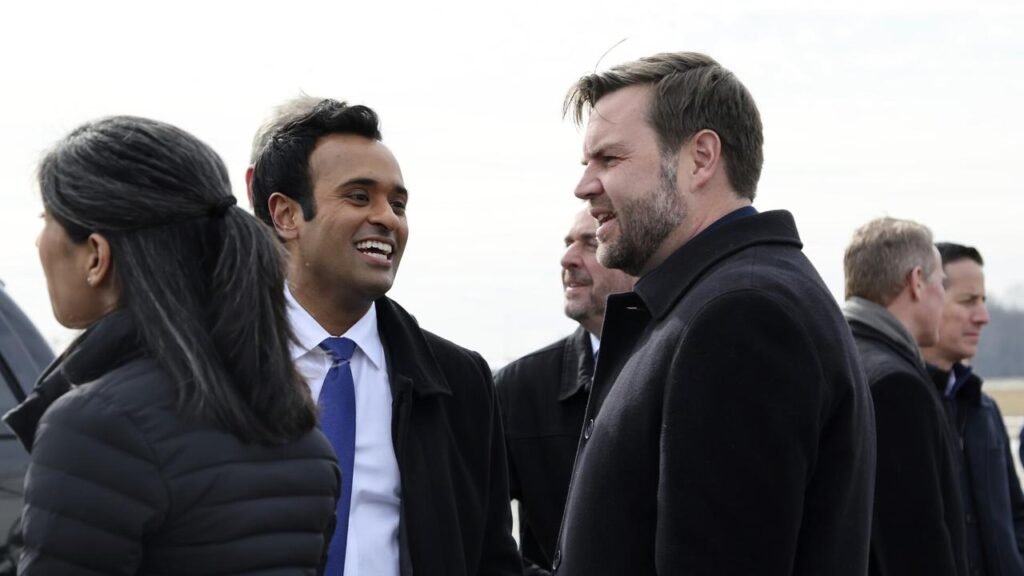
Ramaswamy, whose campaigns have taken immense monetary donations from the likes of Susquehanna International Group founder Jeffrey Yass, Bitcoin evangelist Ross Stevens, and Epstein-associate Glenn Dubin, has spent years in the circle of the technocratic elite that grew out of Silicon Valley. In his speech at a Lincoln Day Dinner in Ohio, according to reporting from The Chronicle, Ramaswamy expressed the intention to move the power nexus out of California and back into the heartland of Ohio: “If it was Silicon Valley leading the way the last 10 years, Ramaswamy said, it should be the Ohio River Valley ‘the next 10 years’ leading the way in manufacturing, energy and the development of artificial intelligence, or AI.”
As noted throughout this article, Ohio’s transformation into the “Silicon Heartland” has come courtesy of a nexus of Wexner-created public-private partnerships and dark money networks that are bleeding Ohio taxpayers dry by siphoning public funds to make their technocratic vision for the state a reality, while raising the cost of living and gutting public services on which many Ohioans rely. Despite Wexner’s role in financing Jeffrey Epstein and Epstein’s own role in the rise of New Albany and the public-private partnership takeover of Ohio state economic development policy, little is being done to prosecute any of the egregious corruption documented in this article.
Instead, thanks to a series of Wexner-funded governors, Wexner’s master plan that started with New Albany has now been replicated throughout the state. Ramaswamy, despite having once said that “transparency is everything” and his claims to have saved taxpayer money at D.O.G.E., has made no mention of any plans to bring transparency to these dark money funnels that benefit Ohio’s richest men on the taxpayer’s dime. He has not even acknowledged these systems exist.
While it is currently unknown how much money Ramaswamy’s current gubernatorial campaign has received from this network, his running mate Rob McColley, has taken money from Wexner’s Bath and Body Works, the New Albany Company and the consulting firm of New Albany Company partner Alex Fischer for his past campaigns. McColley is also the chairman of the Senate Energy and Public Utilities Committee and was the lead sponsor of SB-52 –– a piece of legislation that gives “county commissioners new powers to kill wind or solar projects early in their development.” He notably received $13,500 from Energy industry PACs during the HB6 scandal. Ramaswamy, like DeWine and Kasich before him, is on track to continue to oversee the final stages of Ohio’s transformation into the “Silicon Heartland,” with Wexner’s New Albany at its center.
And yet, the overarching implications of this story hardly remain domiciled to just New Albany, nor the Central Ohio region. In fact, this influence nexus creeps far beyond the borders of the state –– even outside the jurisdiction of the country itself.
Welcome To Technate, Ohio
The localized issues downstream of a string of data centers popping up in an Ohioan municipality are numerous; electricity prices, aquifer drainage, strains on local governments and public infrastructure, air pollution and noise. When tax breaks and other incentives delivered by purchased state regulators are given to these server stewards of the internet’s lymphatic system, to the manufacturers of autonomous war machines, to the stablecoin bankers for agentic entities, or to the silicon brains behind AI usurping human thought, the regional conflict of interests collide with global control structures at breakneck speed.
The unfortunate example that Wexner and Epstein have made of Ohio during the last half century are but signposts of an encroaching technocratic theology that parasitically feeds on local hosts for the purposes of gestation and growth into a far larger –– and far more dangerous –– force. This is not to belittle the very real and tangible effects that citizens of Ohio must endure and pushback upon, but rather that this is a trope of how the technate governance structure utilizes balkanization and the limited resources of a local government as a means to pursue centralized outcomes of power within the hands of the technocratic elite.
The decentralization theater that has taken rise within the talking points of the internet’s most successful entrepreneurs is masking the greatest centralization of power in history. One simply has to look at the businesses investigated in this article to see a fully realized stack of technology that can influence human behavior immensely –– perhaps even to the societal level. Situated within the confines of Wexner’s terrarium are banking rails for monetary weapons of mass destruction (stablecoins), literal rails for building literal weapons of mass destruction (drones), and digital think-tanks capable of delivering insurmountable payloads of destruction to content creation and distribution (artificial intelligence). This three-pronged fork, held by the very hand of the very power nexus that brought Epstein face-to-face with the highest levels of government figures, will leave hardly a crumb for us humans to fight over on the plate of world power.
This is a coup d’état of the global order –– of the very nature of humanity –– actualized by a handful of men with bottomless pockets who were willing to wait decades for their plans to come to fruition. Had these conquerors simply stormed the gates of Capitol Hill, they would have been met with the defensive force of a nation, while simultaneously revealing their now-failed intentions of domination to the entire planet. The world will not be won overnight by overt kinetic force, but by synchronized maneuvers on numerous fronts over numerous decades –– by a seemingly innocuous string of conveniences woven into a penitentiary.
Ramaswamy, as noted in the introduction to this article, spoke these quiet parts out loud upon his departure of D.O.G.E. Musk and Ramaswamy were on the same page, with the former taking the technologic approach, and the latter focused on the State-level of governance –– all in an effort to divide and conquer to “save” the country. While there is little evidence of their efforts saving the country, there certainly is quite a lot of evidence that points towards a division and conquest, as exemplified by the corruption and consolidation within the Buckeye State.
Long gone are the days of Alexander the Great and Attila the Hun, when peoples were enslaved and commodified by the victors of a violent land war. Today, the fronts of the new world war are at the intersection of mind and technology, where the silicon conquistadors lay entrenched in their data centers, banks, and factories. While the internet is routinely compared to an ethereal cloud, in reality, its infrastructure remains tethered to the physical world –– a cluster of chips and processors connected by wires to data centers powered by generators built on land owned, maintained and governed by humans.
If this Central Ohio fiefdom is allowed to prosper without hardly an investigation or meaningful social pushback, the outcome and impact on the world might be disastrous. Centered and maintained in New Albany, Wexner’s and Epstein’s breakaway civilization could very well break apart civilization –– leaving behind a scattering of pieces to be easily consolidated and conquered in its disruptive, technocratic wake.






With much gratitude for this article from Ohio. Indeed we are seeing our energy bills skyrocket, while the tech co’s gobble up farmland to build data-centers. It’s not just around C’bus, but in the outskirts of Cincinnati as well. Case in point is a thousand acres near Mt. Orab being on the block. This local reporter finds that council members are made to sign non-disclosure agreements and then pretend they don’t know what the sale is for, but they know… https://www.youtube.com/watch?v=ik-9tGkhIZk
Great research – Tip of the Iceberg Leon Black’s Apollo control big bulk of media, Columbus Dispatch, Cincy Inquirer and a number of other Gannett – Ramaswamy funded heavily by Epstein related Apollo, who manage millions for Ohio pensions STRS,PERS, CERS, and Ohio State https://commonsense401kproject.com/2026/02/23/epstein-apollo-and-ohio-teachers-billions/ https://commonsense401kproject.com/2026/03/18/vivek-ramaswamy-private-equity-and-ohios-public-pensions/ https://commonsense401kproject.com/2026/03/09/why-public-pensions-should-divest-from-apollo-data-centers/
Greetings from Norway.
Articles like this where one get actual searchable facts and not just an opinion designed to serve those that paid for it makes me think there is still hope for humanity.
I thank you both.
This information should be more widely known, and should get more coverage. Thank you for trying to shine a light on these monsters.
Funny that Ramaswamy wanted to take a constitutional approach while he runs as an ineligible candidate for President. The US Constitution requires that the President and VP must be natural born citizens. Ramaswamy is not a natural born citizen. Both of his parents were citizens of India when Vivek was born. There is a difference between being a citizen and a natural born citizen. Ramaswamy, like Harris, Obama, Rubio, Cruz, Jindal, Shiva, Haley are constitutional illiterates and the dumbed down American people cheer them on. The people of Ohio and other states better wake up soon. Excellent research from Ms. Webb. Thank you. Let’s hope it wakes someone up enough to do something about it.
Since my comment re: Farkas/Epstein was moderated into oblivion for unknown reasons, i’ll try again:
It’s not ironic that a scumbag gangster like Wexner resides in Ohio, since Ohio has a long history of housing mobsters. Which include Diebold bribery corruptions within Ohio, and throwing the 2004 (s)election to Bush!
I love how the leeches of “Organized Crime” absolutely ‘believe’ in what they’re doing yet have, up to now, felt the need to go about it “quietly”. I understand the obvious, yet there’s an inherent sick sense of irony in it. If they think of themselves as so ‘smart’ as to be “chosen” to fuck over the world, why don’t they just proudly “out” themselves whilst they go about doing it? They are ‘deeply’ well-aware that The System actually has no guard-rails to stop them, since all is essentially “bought and sold” corrupt, so why go about hiding it? Well, they’re not! After a hundred years of covert planning, they now realize they no longer need to hide, and are arrogantly letting us know how they are fucking us over, and the planet. Just in U.S. terms, this didn’t just start with the Rockefellers, the Tri-Lateral Commission or Technocracy, our ‘sick’ economic system has its founding in the founding fathers’ Plantation System of Slavery: Manifest Genocide, Racism, lack of empathy, ‘rape’-aciousness and moral depravity!
Begs the question: What’s changed over the past 250 years, other than just more of the same?
The fallacy, the bullshit of the “Public/Private Partnership”! Hell, the DOJ’s “Citizens United” mock’s it! This has been around as long as Capitalism’s Laissez-Faire mantra of “Socializing the Costs and Privatizing the Profits”! Much farther back into history beyond Adam Smith. Yet it is being ‘promoted’ as though Bullwinkle has pulled a new rabbit out of his hat!
What’s really at issue here, and literally at stake, is the complete fallibility and malleability of the human condition.
We reap what we sow, and, in turn, that means the very systems that sustain every living thing on this planet.
https://zenodo.org/search?q=WSMD
https://futurium.ec.europa.eu/en/apply-ai-alliance/community-content/ai-cognitive-warfare-infrastructure-four-paper-research-series-population-level-cognitive-formatting
To Mark Goodwin – Terrific article. I run The New View podcast along with seven women might you be our guest speaker sometime soon? 717-357-7617 in PA